TY-Space Star Trackers and Sun Sensors Support Successful On-Orbit Operations of Three Satellites: Yunyao-1 28, Zhongbei Daxue-1, and Juntian-1 06A (Xingyan-01)
At 7:37 a.m. Beijing Time on November 7,2026, a Ceres-2 Y3 carrier rocket developed by Galactic Energy (BeijingGalactic Energy Space Technology Co., Ltd.) lifted off from the JiuquanSatellite Launch Center. The rocket successfully delivered four satellites—theGuanlan Shiyan (Guanlan experimental satellite), Yunyao-1 28, Zhongbei Daxue-1,and Juntian-1 06A (Xingyan-01)—into their designated orbits.
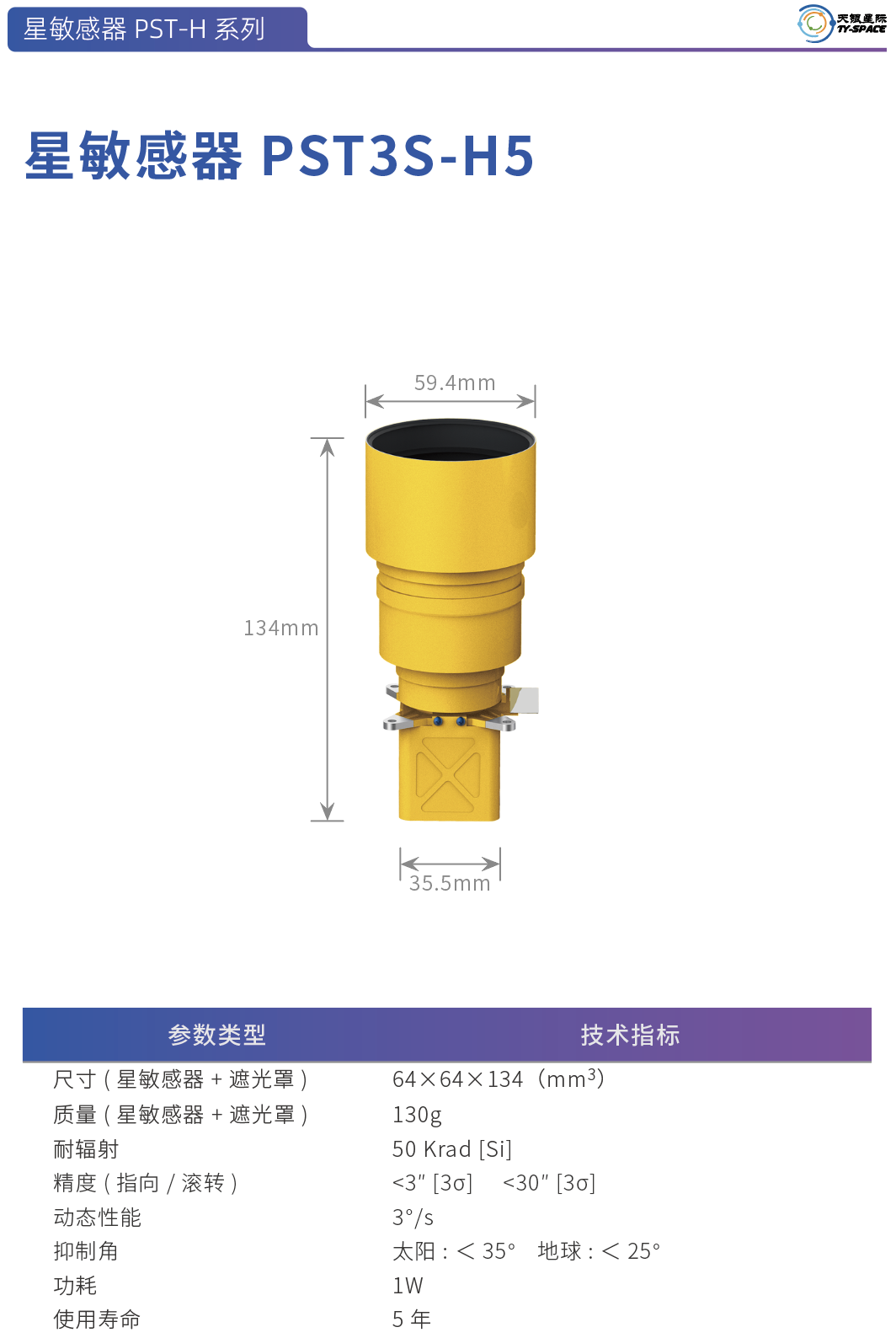
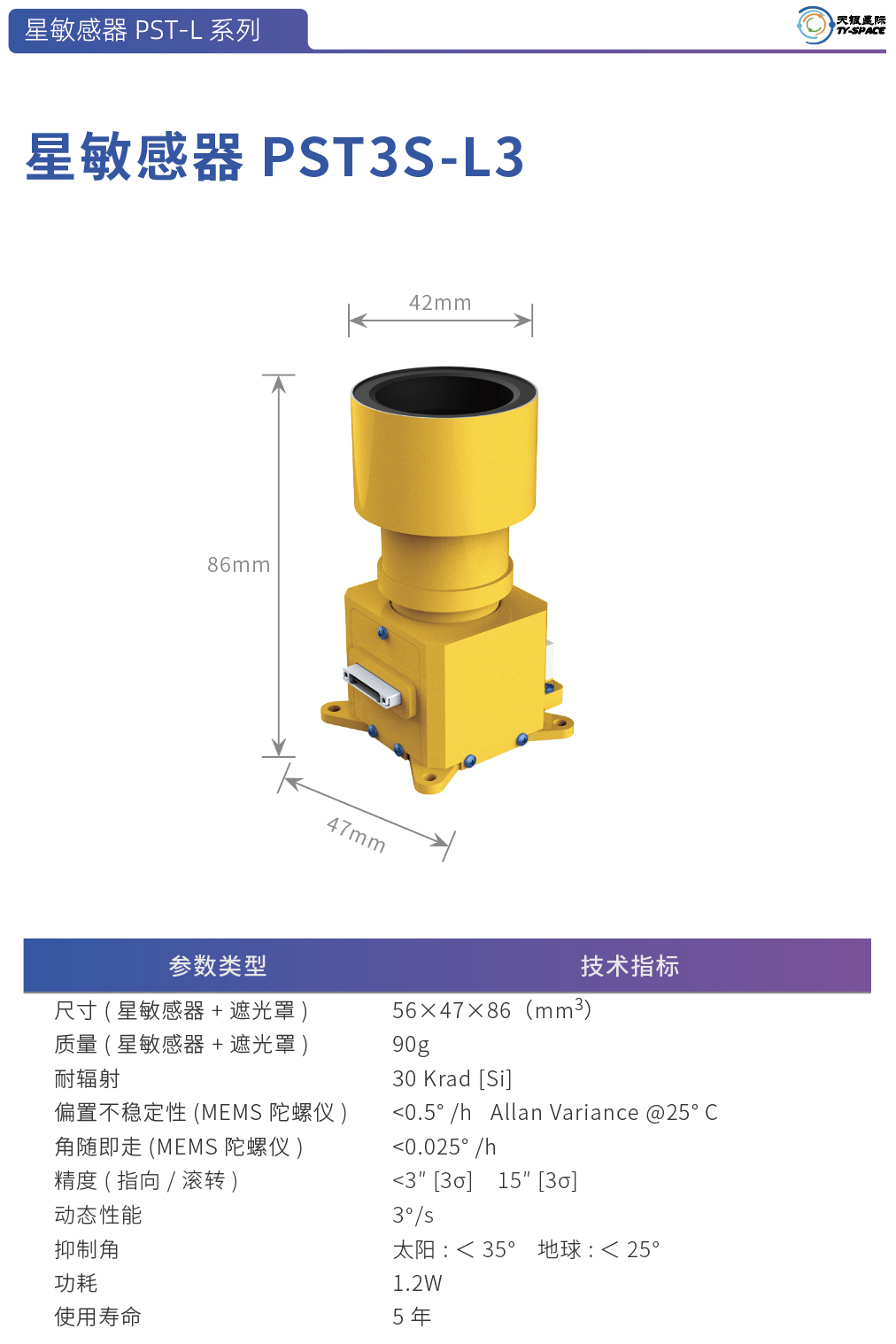
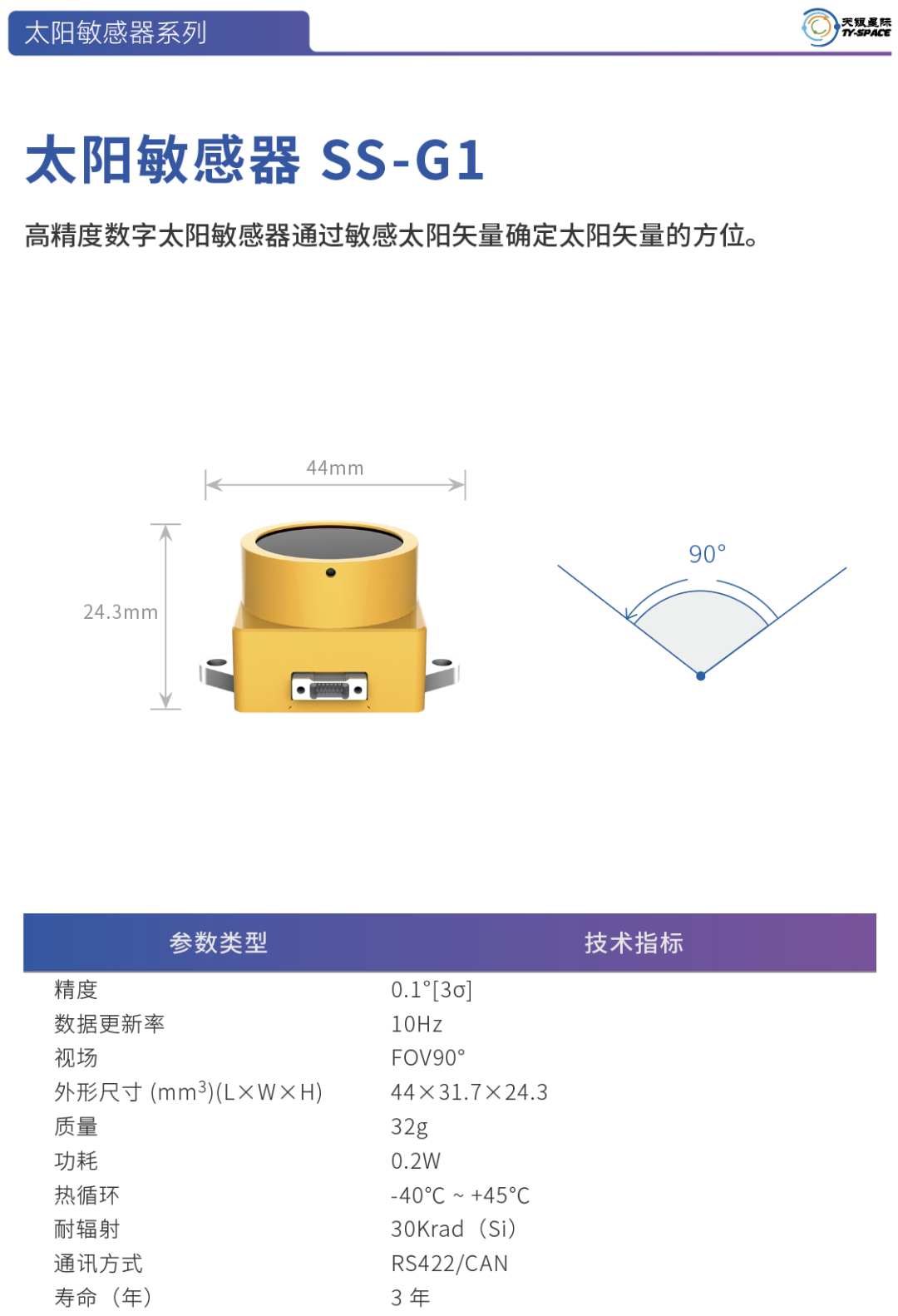
One TY-Space PST3S-H5 pico star tracker,two PST3S-L3 pico star trackers, and two SS-G1 sun sensors entered orbit withthe three satellites. The mission was a complete success.
The Guanlan Shiyan satellite is designed tocollect data on sea-surface height, sea-surface wind speed, and significantwave height, and will conduct observations of submesoscale dynamic processes inthe ocean.
Yunyao-1 28, developed by Tianjin YunyaoAerospace, carries an integrated GNSS radio occultation and sea-surfacereflectometry payload. It is designed to measure atmospheric, oceanic, andother environmental parameters.
Zhongbei Daxue-1 is the first experimentalsatellite of the North University of China–Taihang Constellation project.Equipped with an optical payload, it supports mineral resource monitoring,early warning of geological hazards, and teaching and research applications.
Juntian-1 06A (Xingyan-01) is a spacesituational awareness satellite. It will conduct in-orbit verification of keytechnologies for its satellite platform, onboard payloads, andsatellite-to-ground communication links.
The TY-Space star trackers used in thismission have also been successfully used in multiple satellite andconstellation projects, including the 12 satellites of the Space ComputingConstellation 021 mission, Tianyan-27, and Naxing-3 A/B.